
Doomscrolling: Why Scrolling Hurts Mood & Self-Esteem
/By Concentric Therapist Linzi Diaz, LCSW
Why Doomscrolling Feels So Common Today
If you’ve ever picked up your phone for “just a minute” and somehow ended up 45 minutes deep into social media feeling anxious, inadequate, or emotionally drained, you’re not alone. Doomscrolling has become such a common part of everyday life that many people barely notice they’re doing it anymore. As a therapist, I’ve seen how doomscrolling can quietly shape self-esteem, emotional well-being, and the way people relate to themselves and others.
What makes social media engagement especially difficult is that it often starts with good intentions. Maybe you’re trying to relax after a long day, distract yourself from stress, or simply stay connected. But somewhere between comparison, overstimulation, difficult news cycles, and perfectly curated online lives, many people walk away feeling worse than they did before.
The relationship between doomscrolling and self-esteem is complex. It’s not just about spending “too much time online.” It’s about what happens internally while we scroll, the thoughts we absorb, the comparisons we make, and the stories we start telling ourselves about who we are.
What Is Doomscrolling?
Doomscrolling refers to the habit of continuously consuming large amounts of online content, often negative, emotionally overwhelming, or comparison-driven, for long periods of time. While the term originally became popular during periods of collective stress and crisis, doomscrolling now extends far beyond news consumption.
Recent research from Gallup found that U.S. teenagers ages 13–17 spend an average of 4.8 hours per day on social media, with more than half of teens reporting they spend at least four hours scrolling daily. This highlights just how deeply social media has become integrated into everyday emotional and social life.
For many people, doomscrolling includes:
Constantly checking social media apps
Comparing yourself to others online
Repeatedly consuming distressing news content
Looking at content that triggers insecurity or self-criticism
Feeling unable to stop scrolling, even when it no longer feels good
Doomscrolling can often feel compulsive, as many people describe reaching for their phones automatically, especially during moments of stress, loneliness, boredom, or emotional exhaustion.
How Doomscrolling Impacts Self-Esteem
From a mental health perspective, doomscrolling can significantly impact self-esteem because it changes our perception of self. Social media exposes us to a constant stream of carefully curated images, accomplishments, opinions, and lifestyles. Over time, this creates an environment where comparison becomes almost automatic and often subconscious.
Even when we know social media isn’t real life, our brains and nervous systems still respond emotionally to what we see. Someone else’s engagement photos can suddenly make you question your relationship. A productivity video can make you feel lazy. A stranger’s vacation photos can leave you feeling behind in life.
Over time, doomscrolling can contribute to:
Increased self-criticism
Feelings of inadequacy
Anxiety and overstimulation
Body image concerns
Difficulty being present in daily life
Emotional numbness or burnout
As therapists, we often see people internalize the belief that everyone else is doing better, coping better, or living “better” lives. The problem is not necessarily social media itself, it’s the emotional relationship we develop with what we consume and the meaning we assign to it.
Doomscrolling and the Comparison Trap
One of the biggest emotional consequences of doomscrolling is chronic comparison.
As human beings, we naturally compare ourselves to others. Social comparison is part of how we understand ourselves and navigate the world and is not inherently harmful. However, social media intensifies this process in ways our brains were never really designed for.
Before social media, most people compared themselves to a relatively small social circle. Now, doomscrolling exposes us to hundreds or thousands of people every single day and from all over the world. Influencers, celebrities, entrepreneurs, fitness creators, therapists, parents, and peers, all presenting highly curated versions of themselves.
With constant doomscrolling, comparison can start to feel inescapable.
You may begin to question:
Am I successful enough?
Attractive enough?
Productive enough?
Happy enough?
Healing “fast enough”?
Doing enough with my life?
Social media can distort your reality and make it seem like the goalposts are always moving. No matter what you achieve, there is always someone online appearing to do more.
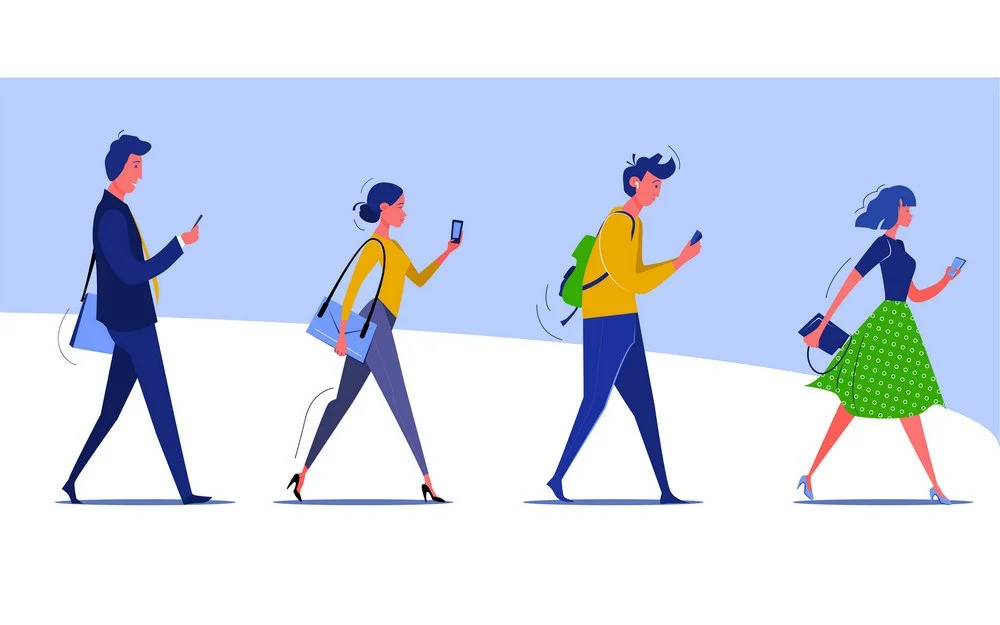
Creator is Pch.vector from Magnific.com (previously freepik.com)
Why Doomscrolling Feels So Addictive
Many people feel frustrated with themselves for how much time they spend online, especially when they know it negatively impacts their mental health. But doomscrolling is not simply due to a lack of willpower.
Social media platforms are designed to keep our attention. Endless scrolling, notifications, algorithm-driven content, and intermittent rewards all activate the brain’s reward system. The unpredictability of what comes next keeps people engaged longer than intended. It is essentially as if one is sitting in front of a slot machine, hoping the next pull will win the big prize.
Emotionally, doomscrolling can also function as a coping mechanism.
People often turn to social media when they are:
Avoiding difficult emotions
Feeling disconnected or lonely
Trying to numb stress
Seeking distraction
Looking for validation or reassurance
Many people approach doomscrolling with shame or self-judgment, but underneath the behavior is often a very human desire for comfort, connection, or escape.
Doomscrolling and Body Image
One area where doomscrolling can deeply impact self-esteem is body image.
Social media constantly exposes people to unrealistic beauty standards, edited images, fitness culture, and appearance-focused content. Even content intended to be “motivational” can trigger shame or self-criticism when consumed excessively.
In therapy, many clients describe feeling okay about themselves until they spend extended time scrolling. Suddenly, they become hyperaware of perceived flaws, weight changes, skin texture, aging, or appearance differences.
Social media can distort what people perceive as “normal.” Filters, editing apps, cosmetic procedures, and carefully staged content blur the line between reality and performance.This is especially important for adolescents and young adults, whose identities and self-esteem are still developing.
The Emotional Exhaustion of Doomscrolling
One of the lesser-discussed effects of doomscrolling is emotional exhaustion.
Many people leave social media not only feeling insecure, but emotionally overwhelmed. Doomscrolling exposes individuals to a nonstop cycle of comparison, tragedy, conflict, productivity culture, and information overload.
Our nervous systems were not built to process this much stimulation all at once.
As a therapist, I often hear clients say things like:
“I feel mentally cluttered.”
“I can’t shut my brain off.”
“I feel anxious for no reason.”
“I feel emotionally drained all of the time”
Doomscrolling keeps many people in a near-constant state of hypervigilance and overstimulation. Even when the content itself seems harmless, the volume can leave people feeling emotionally depleted.
5 Signs Doomscrolling May Be Affecting Your Mental Health
1. You feel worse after using social media
If you consistently leave social media feeling anxious, insecure, angry, or emotionally drained, your nervous system may be signaling that something needs attention.
2. You compare yourself constantly
Doomscrolling often creates an ongoing cycle of self-evaluation and comparison that can slowly chip away at self-esteem.
3. You struggle to stop scrolling
Many people intend to spend five minutes online and end up scrolling for an hour or more.
4. Your mood depends on online validation
Likes, comments, views, and engagement can begin to shape how people feel about themselves.
5. You feel disconnected from your real life
Excessive doomscrolling can make it harder to stay present, connected, and engaged offline.
5 Ways to Create a Healthier Relationship With Doomscrolling
The goal is not necessarily to quit social media completely. For many people, social media provides connection, education, humor, creativity, and community. Instead, the focus is often on building a more intentional relationship with scrolling.
1. Notice how doomscrolling affects you
Start paying attention to your emotional state before and after social media use.
2. Curate your feed intentionally
Unfollow or mute accounts that consistently trigger comparison, shame, anxiety, or inadequacy.
3. Create boundaries around scrolling
This might include:
Keeping phones out of the bedroom
Limiting social media during vulnerable times
Taking breaks from apps periodically
Turning off notifications
4. Reconnect with offline experiences
Self-esteem grows through lived experiences, relationships, values, creativity, rest, and genuine connection, not just digital validation.
5. Practice self-compassion
Many people judge themselves harshly for doomscrolling but shame rarely creates sustainable change. Curiosity and compassion are often far more effective.
Doomscrolling, Self-Esteem, and Therapy
Therapy can help people better understand the emotional patterns underneath doomscrolling. Often, the issue is not just the behavior itself, but what the behavior is helping someone avoid, soothe, or seek.
In therapy, people may explore:
Why comparison feels so triggering
Patterns of perfectionism or self-criticism
Anxiety connected to productivity or achievement
Body image concerns
Emotional regulation skills
Boundaries with technology and social media
Many people are surprised to discover how much their self-esteem improves when they reduce comparison-based scrolling and reconnect with their own values, needs, and identity offline.
If you’re looking for support around self-esteem, anxiety, or emotional burnout, Concentric Counseling & Consulting’s individual therapy services may be a helpful starting point.
Final Thoughts
Doomscrolling is incredibly common, especially in a world where we are constantly connected, overstimulated, and navigating enormous amounts of information every day. If social media sometimes leaves you feeling inadequate, emotionally exhausted, or disconnected from yourself, that does not mean you are weak or failing. It means you are human.
The good news is that awareness creates room for change.
You do not have to completely disconnect from social media to protect your mental health. Small, intentional shifts can make a meaningful difference. Paying attention to how doomscrolling affects your self-esteem, boundaries, and emotional well-being is often the first step toward creating a healthier relationship with technology and with yourself.
At the end of the day, your worth cannot be accurately measured through an algorithm, a follower count, or a perfectly curated online life. Real self-esteem is built much more slowly and deeply than that. It grows through self-awareness, authenticity, connection, and learning to see yourself with compassion both online and offline.
References:
Rothwell, J. (2023, October 13). Teens spend average of 4.8 hours on social media per day. Gallup News. https://news.gallup.com/poll/512576/teens-spend-average-hours-social-media-per-day.aspx
About Concentric Counseling & Consulting:
Concentric is a mental health group practice offering individual therapy, couples and relationship counseling, tween and adolescent support, family therapy, couples intensives, and consulting and supervision services. Our therapists work with a wide range of concerns, some of which include anxiety, depression, mood-related challenges, complex and developmental trauma (C‑PTSD), relationship and family difficulties, school and peer issues, relational trauma, mind–body connection, life transitions, acute and chronic stress, grief and loss, identity and purpose exploration, substance misuse, and unresolved family‑of‑origin experiences.
Many of our clinicians and therapists also bring additional areas of specialization, which you can explore on their individual bios.
We provide care 7 days a week, with in‑person sessions available at our Chicago offices in The Loop and Sauganash neighborhoods, as well as virtual teletherapy for added flexibility.
Services offered in English, Spanish (Español), Romanian (românǎ), and basic KOREAN (한글)
If you are ready to learn more or get started with us, please reach out to us here.